
The Art of the Lay: Why Your Mortar Isn’t a Point-and-Shoot Weapon
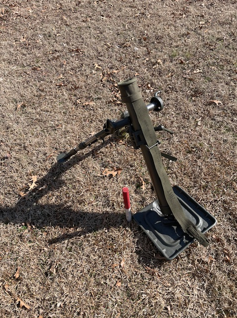
If you spend any time in the civilian mortar world, you already know what everyone loves to talk about: ammunition, custom ignition charges, and pushing the maximum range. Those topics are fun, and they certainly matter. But all that talk tends to overshadow the single most important factor in mortar accuracy: how the gun is laid.
Let’s be honest for a second. A mortar is not a precision instrument by itself. It’s a steel tube. The accuracy doesn't come from the metal; it comes from your consistency. Consistent gun placement, consistent sight alignment, consistent deflection, and consistent elevation are what transform that tube into an effective weapon system. You can have the best ammunition and the most meticulously developed charge in the world, but they won't compensate for a poorly laid gun.
In the military, laying the mortar is one of the very first skills taught to a new gunner. Why? Because every single firing solution depends on it. If your initial lay is bad, every correction you make afterward is just a frustrating attempt to build a house on a shaky foundation.
For a lot of civilian shooters stepping into the Destructive Device (DD) and NFA mortar world, this whole process can feel unfamiliar. It’s easy to treat a mortar like an oversized launcher rather than a true, crew-served indirect fire system. But when you do that, the result is completely predictable: inconsistent impacts, trouble spotting your trends, and a whole lot of guesswork instead of repeatable procedures.
At its heart, the purpose of laying a mortar is incredibly simple. You are trying to establish a repeatable, rock-solid relationship between five specific things: the mortar itself, your sight unit, your aiming reference, your direction of fire, and the target area.
The Core Connection
Once you lock that relationship in, the magic happens. The gun can repeatedly return to the exact same orientation, even after brutal recoil, manual adjustments, or successive fire missions.

To make that happen, you have to master two primary directional components: deflection (your left and right movement) and elevation (your up and down angle). Deflection determines your horizontal direction, while elevation dictates the trajectory and range of the round.
Unlike direct-fire weapons, you usually aren't looking at the target. Instead, you align your sight unit with an aiming reference point while mechanically adjusting the tube to match your firing data—whether that comes from charts, plotting boards, or a ballistic calculator. This is the big mental shift between direct and indirect fire. You aren't "pointing" the mortar at the target in the traditional sense; you are laying it according to precise angular data.
The Team of Components
To get a proper lay, you need several components working in perfect harmony. The tube gives you your launch platform and ballistic consistency, while the bipod houses the traversing and elevating mechanisms for your fine adjustments. Beneath it all, the baseplate anchors the system and absorbs the massive recoil forces. On top, the sight unit provides your precise optical reference, which you align with your aiming posts or other stable reference points.
Whether you are shooting an M2, an M224, or an M252, they all use these exact same underlying principles despite their differences in size and weight.
The Initial Lay: Setting the Stage
There’s an old saying that absolutely rings true here: as your initial lay goes, so goes the rest of your day.
The process always begins with a rough alignment of the gun in the general direction of fire. To get the best results, your process for laying in should be identical every single time. We teach Army doctrine: start with an elevation of 1100 mils and a deflection of 0 mils laid directly on the Direction of Fire.
Next, you need to make sure that baseplate is seated firmly. Poor baseplate seating is easily one of the most common causes of inconsistency, especially on loose or uneven dirt. If your baseplate is shifting, your tube's orientation changes after every single shot. Realistically, you can expect the baseplate to settle or dig itself in within the first three rounds.
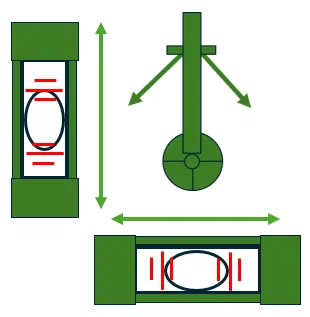
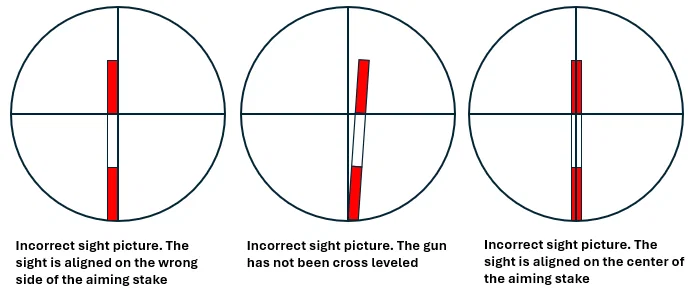
Once the mortar is emplaced, extend the bipod, mount the sight unit, and cross-level the system. From there, align the sight onto your aiming posts. In military gunnery, these posts are placed meticulously because poor placement creates a tiny angular error that compounds drastically with distance. Use the traversing mechanism to align your sight picture with your assigned deflection, and just like that, you are no longer merely pointed "toward" the target. You are mechanically aligned to a known reference.
The Danger of a Sloppy Sight Picture
A consistent sight picture is absolutely critical because small errors at the gun turn into massive misses downrange. A minor angular deviation at your position can easily translate into dozens of meters of error at the target area, particularly when you are using high-angle fire.
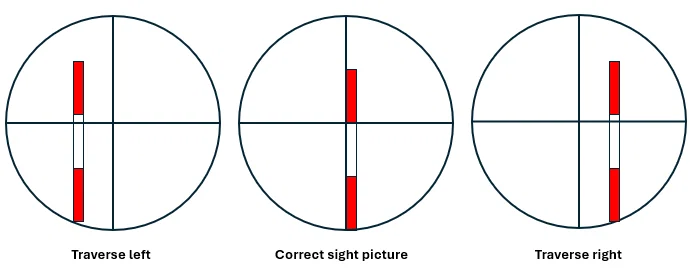
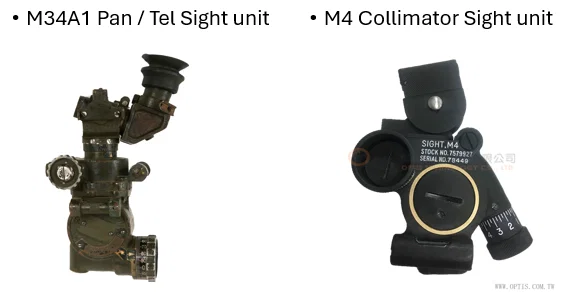
Because mortars operate in mils, even experienced gunners can make simple mistakes under stress. Take the M34 mortar sight, for example. It is an incredibly capable piece of kit compared to older systems, but it will absolutely punish sloppy operation. Under pressure, it is surprisingly easy to make a 100-mil error if you lose track of the scale or rush your adjustments. That kind of mistake isn't just theoretical; it happens regularly when crews get overwhelmed or try to move too fast.
That type of mistake is not theoretical. It happens regularly when crews become task-saturated or attempt to move too quickly.
Here’s a quick pro-tip to save your gear: before you fire that first round—and right after you’ve laid in—take the sight off the gun. This prevents the violent shock of those first settling rounds from damaging your optics. Once the baseplate has settled into the dirt, you can leave the sight mounted.
The Constant Battle Against Drift
One of the most misunderstood aspects of mortar operation in the civilian community is that laying a gun isn't a "one-and-done" task. You have to continually re-lay the gun.
Every single shot introduces movement. Your bipod shifts, your baseplate settles, your sight vibrates, and the gunner introduces minor disturbances just by touching the weapon. Because of this, you must verify your lay after every round. Check your bubble levels, your sight alignment, your deflection, your elevation, and your aiming reference consistency.
When a crew fails to re-lay the gun, they will often notice their impacts start to "walk" unpredictably across the field. They usually end up blaming ammunition inconsistency or charge variations, but in reality, the gun itself has simply drifted off target.
Crucial Mistakes to Avoid
When watching inexperienced crews, a few common errors pop up like clockwork:
- Using terrible aiming references: Improvised aiming points that are too close, unstable, or poorly defined make precise alignment nearly impossible.
- Failing to level the sight: Any cant in the system introduces a directional error that becomes severely magnified at longer ranges.
- Improper bipod loading: Setting up on loose ground without properly loading the bipod causes the mortar to jump and shift after every round, destroying repeatability.
- Chasing impacts visually: Trying to compensate for a poor lay by visually "walking" rounds onto a target might work at short distances, but it breaks down completely as the range increases or visibility drops. It just leads to a frustrating cycle of overcorrection.
Direct vs. Indirect Lay
Now, direct lay methods—where you can actually see the target—are often best for civilian mortars. At short ranges, especially during demonstrations, competitions, or just having fun, it is entirely possible to engage targets using visual observation and rapid corrections. In fact, most civilian mortar events operate exactly this way.
However, true indirect fire procedures exist for a reason. Laying a gun indirectly allows a crew to engage targets that aren't visible from the gun position, maintain repeatable firing data, coordinate multiple guns, and build corrections based on pure geometry rather than guesswork. The further out your target is, the more critical proper laying procedures become. At extended ranges, you cannot rely on instinct or visual alignment. Angular precision becomes mandatory.
That being said, I generally don't recommend that civilians practice true indirect fire outside of a highly controlled setting. It requires a massive amount of moving parts to do safely, including a trained and competent Forward Observer (FO), a deep understanding of Fire Direction Control (FDC), and flawless communications between the FO, the FDC, and the gun line.
Final Thoughts
At the end of the day, a mortar is ultimately a geometric system. The gun doesn't care about your intuition, your confidence, or your experience. It only responds to angles, alignment, consistency, and strict procedure. That is why professional crews spend countless hours mastering the laying process. It is the absolute foundation upon which every successful fire mission is built. Ammunition and charges matter, but if you want to actually hit what you are aiming at, you have to start the lay.